The flyback converter circuit and its operation is explained here.
3. Flyback Converter Analysis
The analysis of any converter involves in deriving the circuit output and input relation in terms of voltage and current equations, inductance and capacitance equations, and maximum stress across each component in circuit for its selection.
- Output – Input Voltage Relation
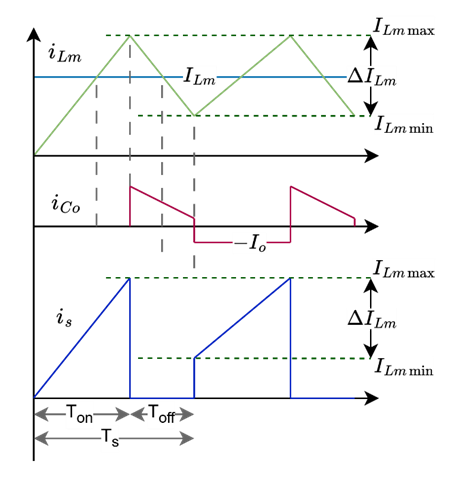
The rate of change of current through magnetizing inductor in both modes i.e. charge and discharge are equal and opposite

Therefore,
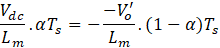


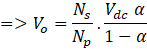
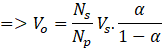
Inductor follows the volt-sec (voltage*time) balance principle i.e. average voltage across an inductor for one full cycle in steady state is zero.
Therefore,



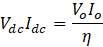
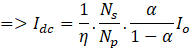
Output – Input Current Relation
Power balance,


Inductance Equation
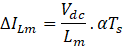
From switch turn-on period, the ramp change in inductor current
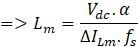
From switch turn-off period, the ramp change in inductor current
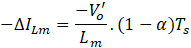
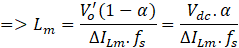
- Capacitance Equation
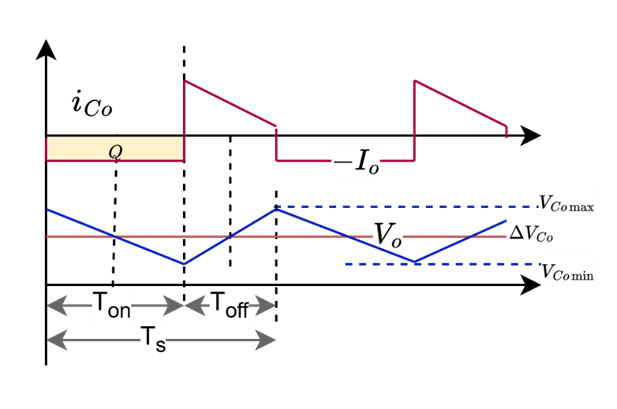
the current through capacitor in ON condition is,



Q = charger = area of capacitor current in a half cycle
From capacitor current waveform (rectangle shape),



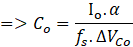
The minimum capacitor value that requires can be calculated using above equation.
- Circuit Components Rating
- Inductor
Average current,

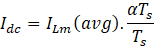
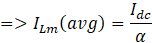



Average current through capacitor is always zero.
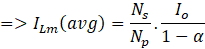
Therefore,
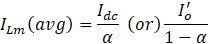
Maximum current through inductor,

Minimum current through inductor,

2. Switch
Average input/switch current,

Maximum input/switch current,

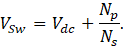
Maximum voltage across switch,
3. Diode
Average current through diode,

Maximum current through diode,

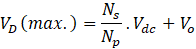
Maximum voltage across diode,
4. Capacitor
Average voltage across capacitor,

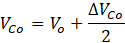
Maximum voltage across capacitor,
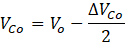
Minimum voltage across capacitor,
4. Flyback Converter Design
- The following specifications are used for design example
Input voltage,
Output voltage,
Output power,
Frequency,
Efficiency,
Voltage ripple,
Current ripple,
Turn ratio,
2. Input and output parameters
Input power,

Input current,

Output current,
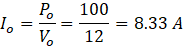
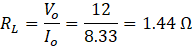
Load resistor,
Duty cycle,

3. Current and voltage ripple
Average inductor current,

Inductor current ripple,

Average voltage across capacitor,

Capacitor voltage ripple,

4. Inductance and Capacitance
Inductance,

Boundary inductance,

Minimum Capacitance,

5. Ratings
Maximum input/switch/diode/inductor current,

Average current through switch,

Average current through diode,

Maximum current through diode,

Maximum current through capacitor,

Maximum voltage across capacitor,

Leave a Reply