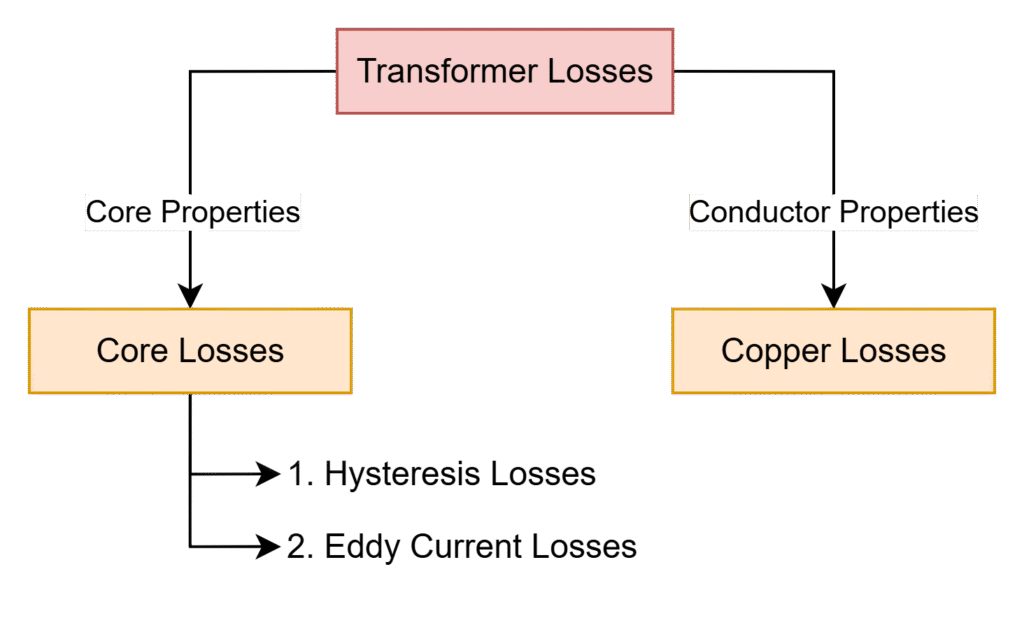
Losses occurs in the transformer by its core and conductor materials. These are named as
- Core Loss
- Copper Loss
Core losses are depends on the only core properties and these are sub-divided into Hysterisis and eddy current losses.
Copper losses are depends on the only conductor properties i.e. wire.
Hysteresis Losses
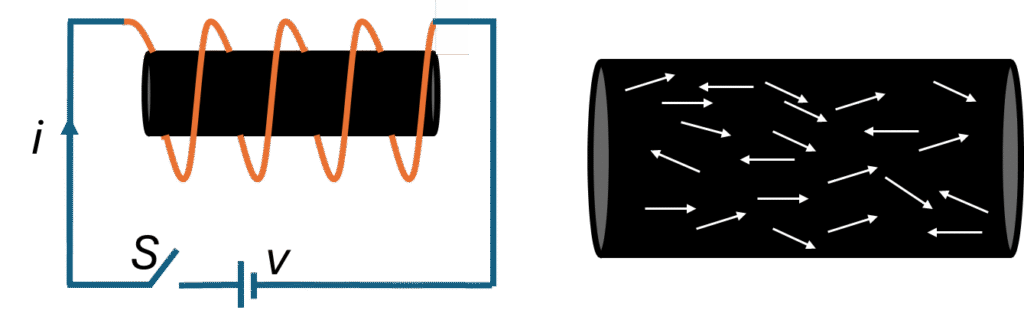
When we place the magnetic core around a current carrying conductor, before switch is closed, the dipoles inside this magnetic core are random in direction. No EMF will be developed and bar is not magnetized.
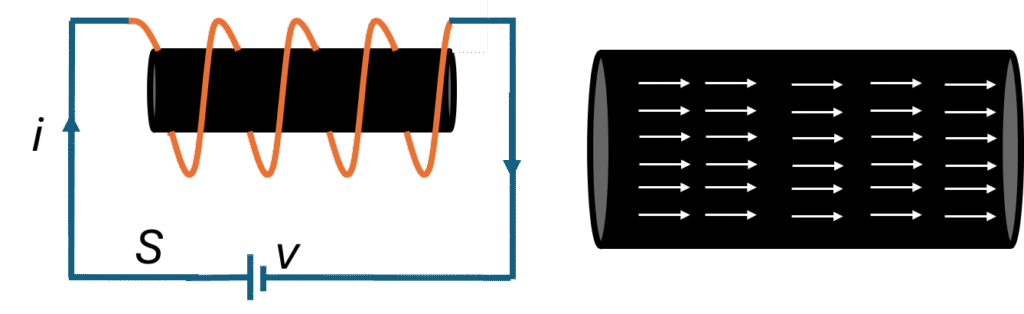
Once the switch is closed, current starts flowing through conductor around the magnetic core. The dipoles in magnetic core starts coming in one direction and align with current direction. Once all dipoles are in one direction, magnetic core is fully magnetized material.
When switch in the circuit open suddenly, current flow stops,then most of dipoles in magnetic core start goes back to their original positions. But some of dipoles remains in same position in core.That means core has some magnetization that is called ferro-magnetization.
To demagnetise this ferro-magnetic core, extra energy needs to spent. This needs to happen in every cycle. The extra energy spending in every cycle appears in the form of heat. This heat loss is called as hysteresis loss.
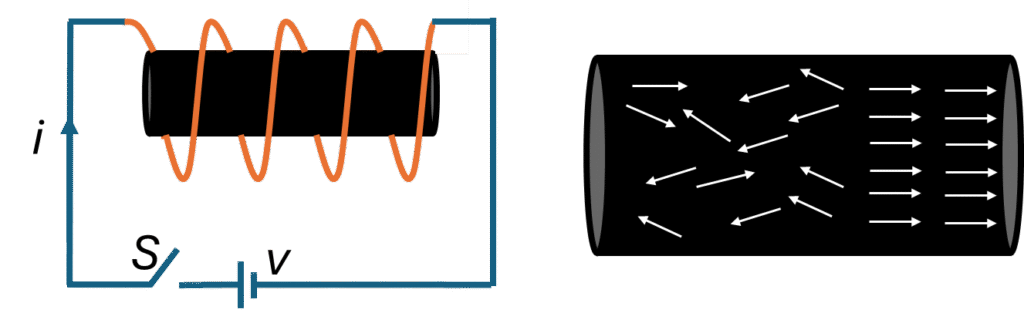
During the cycle of magnetization and de-magnetization of magnetic substances, energy is spent, and this spent energy appears in form of heat. This heat loss is called hysteresis loss.

Eddy Current Losses
- When source and load are connected at the trasformer primary and secondary windings respectively, current starts flowing in the primary.
- Due to current in the primary, flux starts developing in the primary
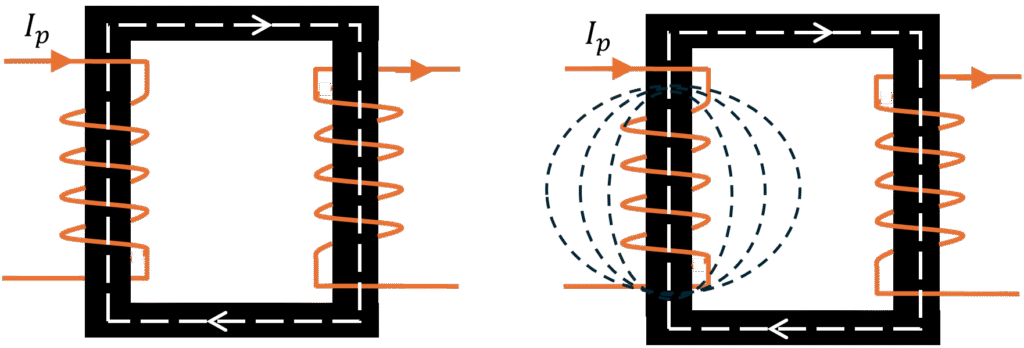
- This developing flux in the primary links with secondary
- Flux linkage with secondary, induces the EM, and then current starts flowing in secondary as well. This secondary current contributes to the load current.
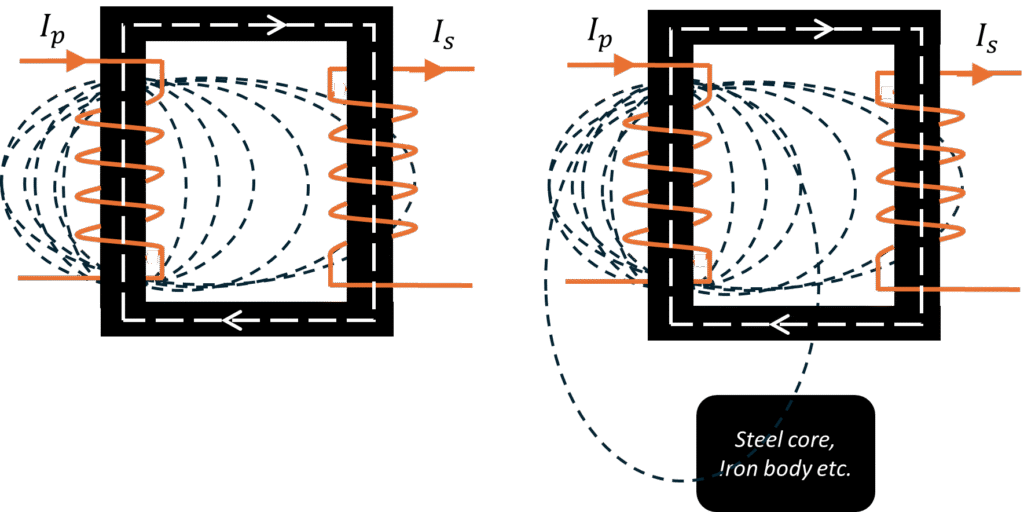
- Other than transformer two windings, steel/iron components will be there in the circuit.
- Most flux in primary link with secondary and contributes to load power
- Some of flux in the primary also links with other iron/steel components in the circuit. Hence it induce local EMF. Then current flows in those parts due to induced EMF. This local current does not contribute anything to load power. Only dissipates in air in form of heat. This energy loss is called eddy current loss in the transformer.

Copper Losses
Copper losses are depends on the only conductor properties i.e. wire which is winding on the core.
We have windings on primary and secondary sides.
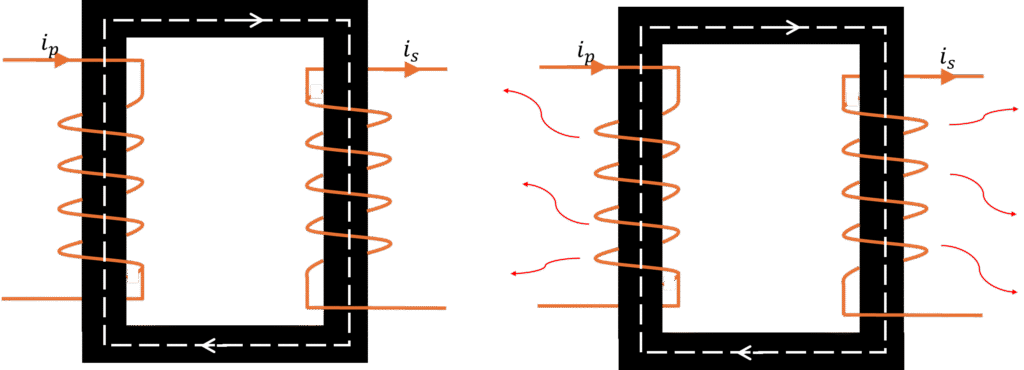
When source and load is connected in primary and secondary sides respectively, current starts flowing through winding.
As we know that every wire will have some internal resistance. Due to this internal resistance of wire, some heat dissipates in both sides. This heat dissipation is called copper loss.

Currents in primary and secondary depends on the how much load we connected. That means if we change the load, the value of current flowing in primary ans secondary changes as per the load. Hence copper losses vary with load. Therefore, these losses can be called variable losses.
Core loss does not depend on current and does not change with load. Therefore, these losses called constant losses.
Total Loss in the transformer

Leave a Reply